![Kyoto [Gallery-So] for purchase, sale, and appraisal of art works](https://gallery-so.net/images2/common/so-logo.png)
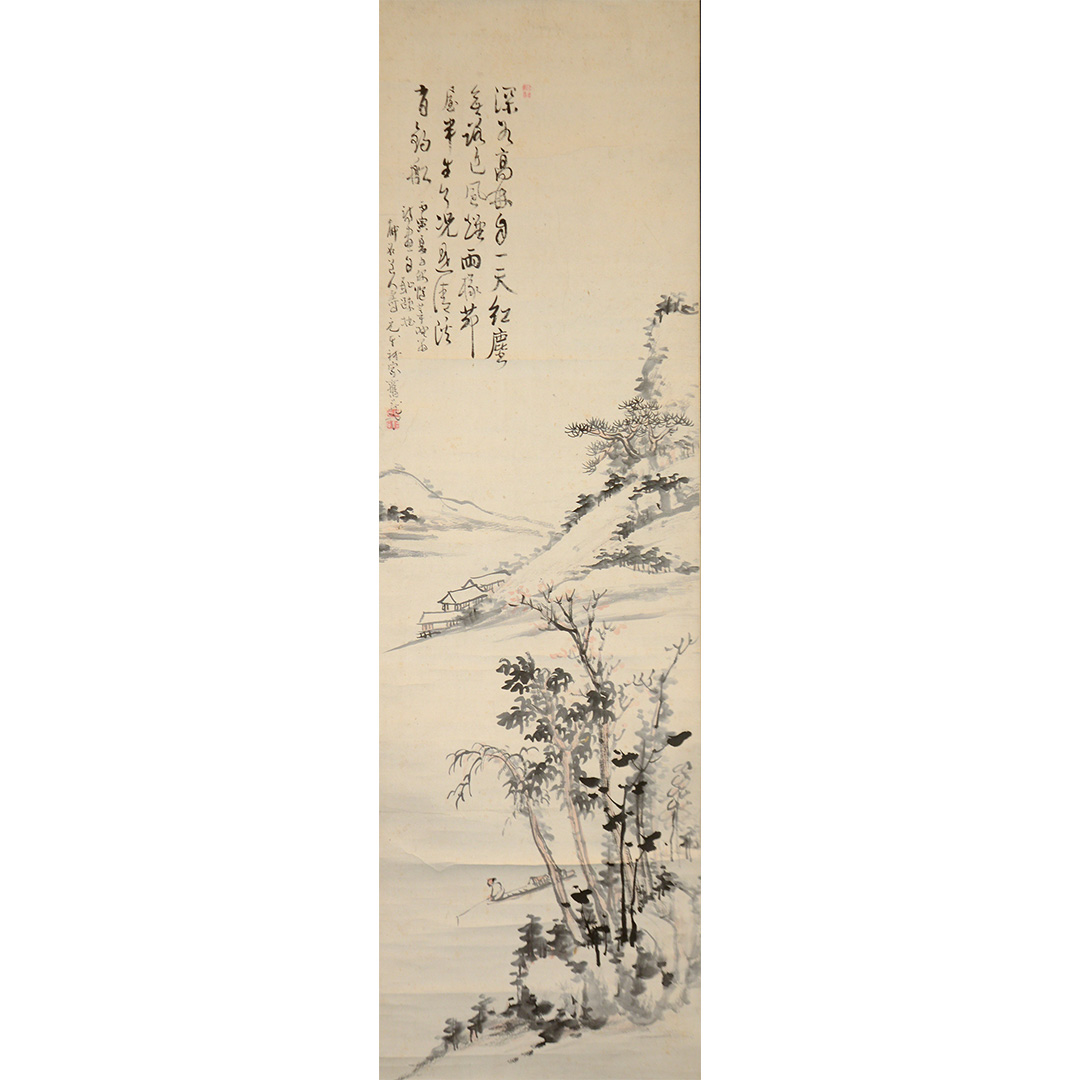
“Autumn Landscape”
Nakanishi Kōseki
Click the image to enlarge.
- Artist Name
- Nakanishi Kōseki
- Title
- “Autumn Landscape”
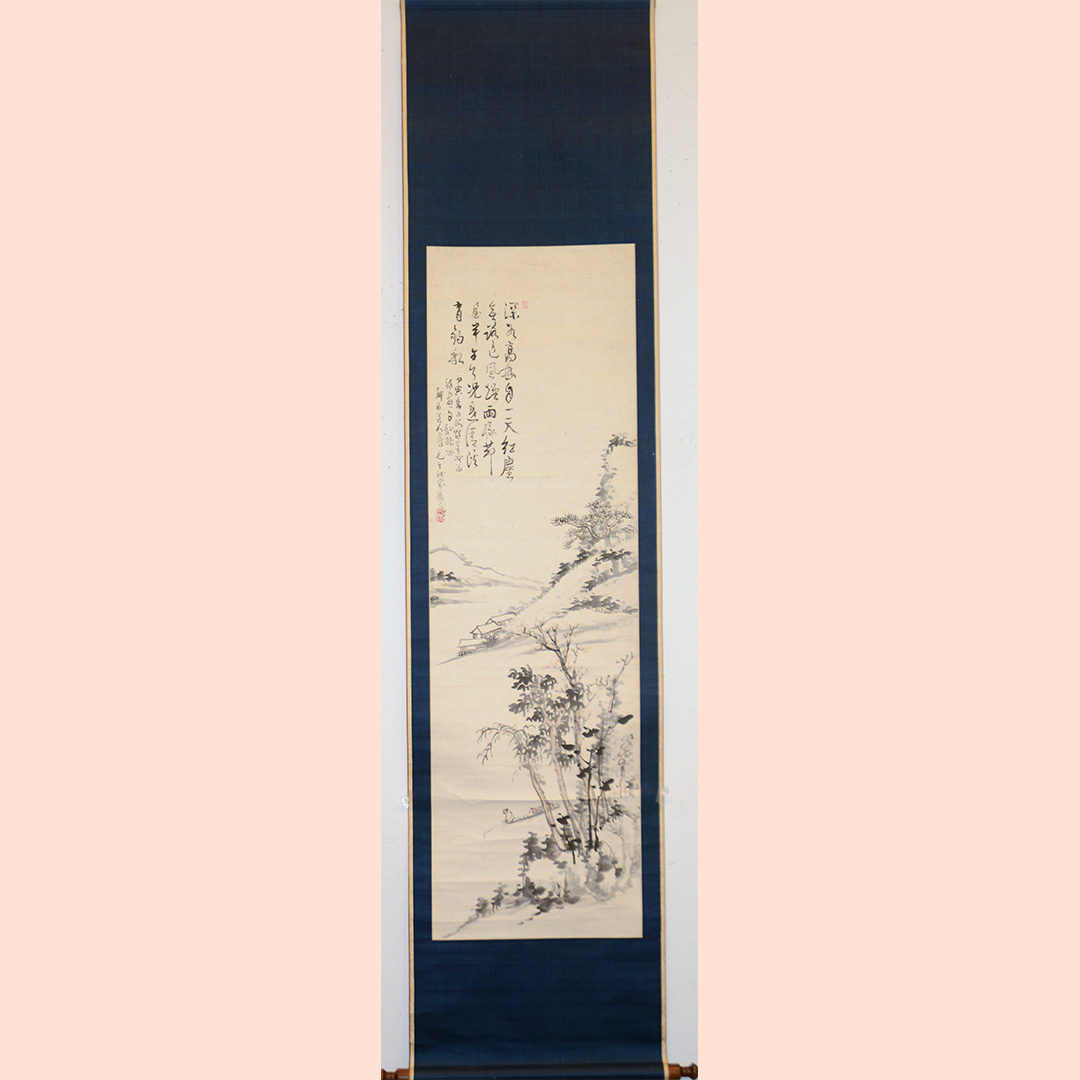
- Dimensions
- painting:111.3×33.6㎝
full length:175.0×41.5㎝ - Medium
- “Ink and Color on Paper”
- Year
- Summer 1866
- Description
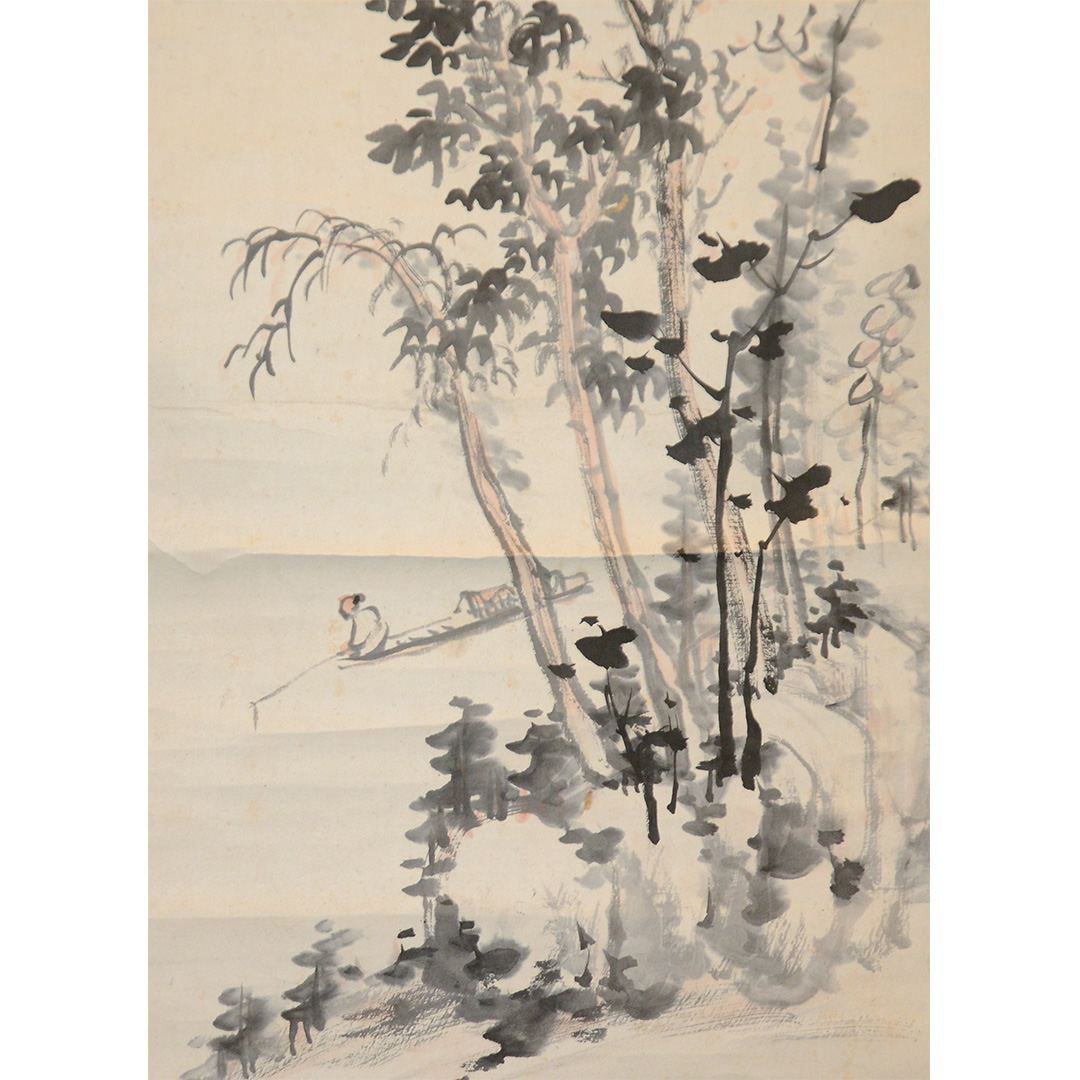
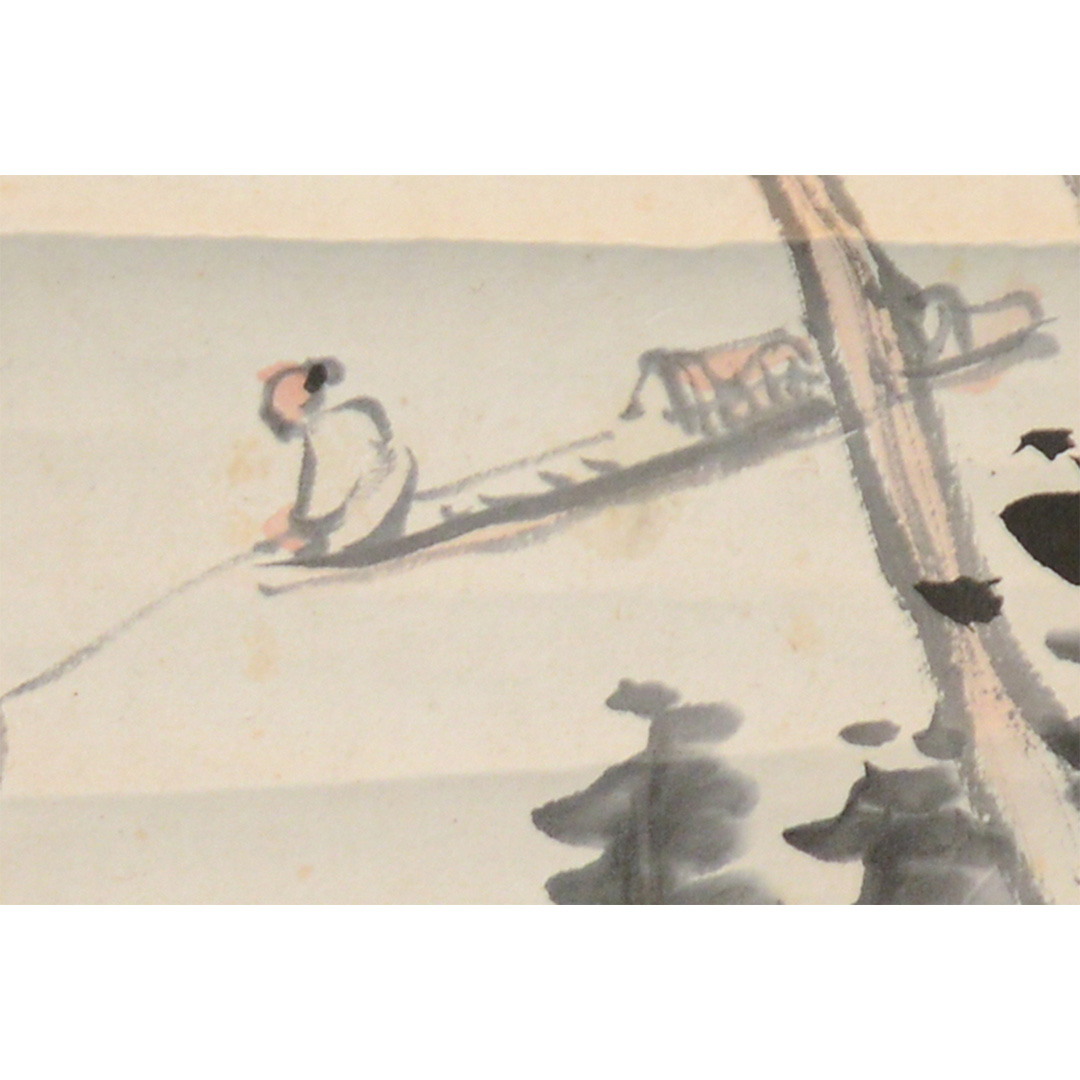
- This work is an *Autumn Landscape* by Nakanishi Kōseki. In the foreground, a gently sloping earthen bank is depicted with fantastically shaped rocks and trees tinged in red autumn foliage. In the middle distance, a waterside scene unfolds with a small boat, from which a figure lowers a fishing line into the water. On the right in the far distance rises a towering mountain, at whose base stands a pavilion; beyond it, softly rolling hills extend into the background.
The trees in the foreground are rendered in dry brush (*kappitsu*), leaving visible brushstrokes that create a distinctive texture. By placing a tree painted in dense ink at the very front and layering the motifs in overlapping arrangements, the artist achieves a strong sense of spatial depth and three-dimensionality.
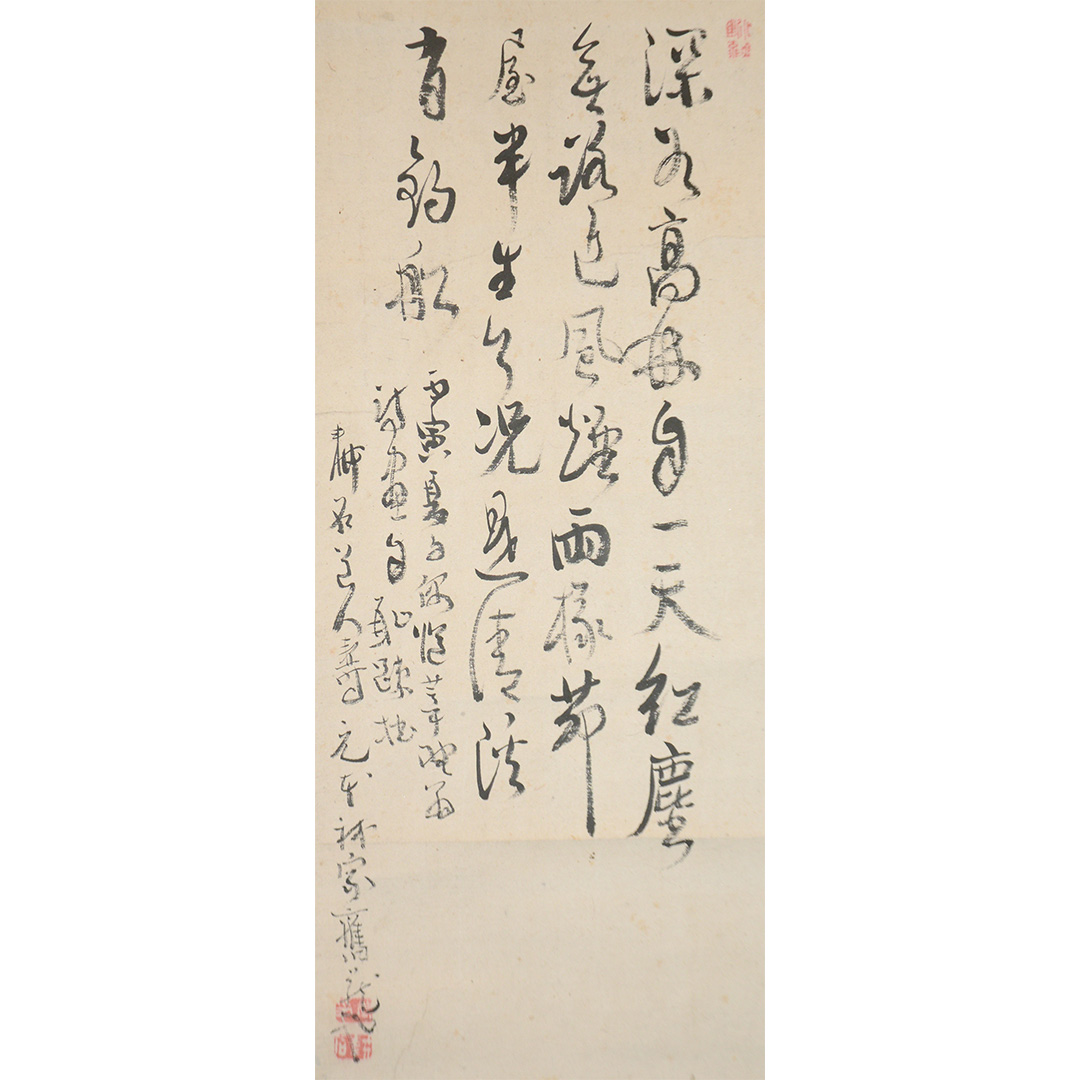
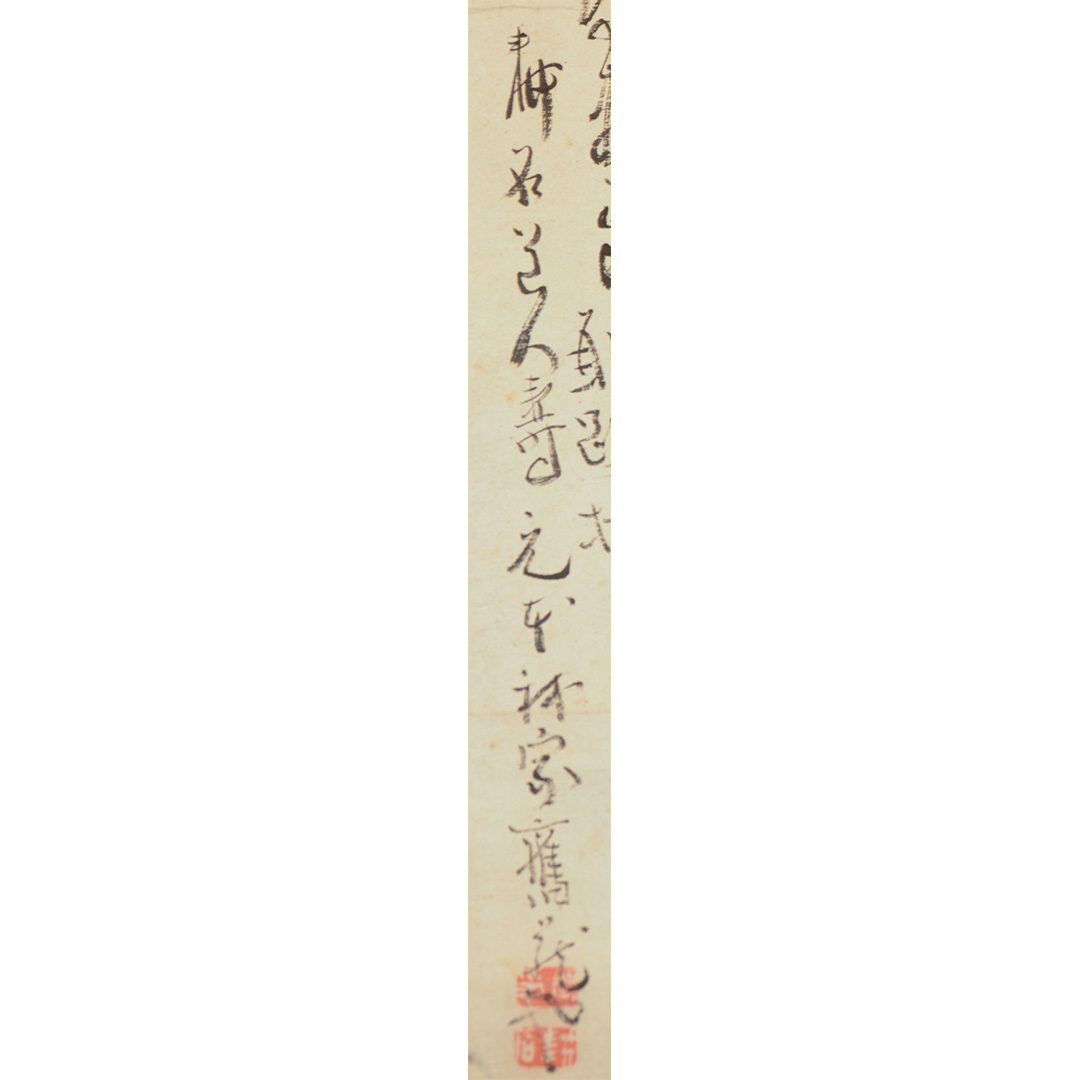
An inscription on the painting confirms that it was executed in Keiō 2 (1866).
Nakanishi Kōseki (1807–1884) was a Japanese-style painter active from the late Edo through the early Meiji period. He was born in Ashiya, Chikuzen Province (present-day Fukuoka Prefecture). His personal name was Juhei, later changed to Hisashi; his courtesy name was Kinen. He used several art names, including Chikusō and Senga.
At a young age, he moved to Kyoto, where he studied painting under Matsumura Keibun of the Shijō school. He later went to Osaka to study Chinese learning under Shinozaki Shōchiku. Upon returning to Kyoto, he studied Nanga (literati painting) under Oda Kaisen. In the Nanga circles of the late Edo period, he was ranked alongside Hine Taizan. He received stipends from both the Chikuzen and Tsu domains.
After the Meiji Restoration, he became one of the leading Nanga painters representing Kyoto. In 1880 (Meiji 13), when the Kyoto Prefectural School of Painting was established, he was appointed to a teaching position there. Among his pupils were Yoshitsugu Haizan, Ueda Tekkō, and Kinugasa Gōkoku. He is regarded as a founding figure of the Fukuoka Nanga school.