![Kyoto [Gallery-So] for purchase, sale, and appraisal of art works](https://gallery-so.net/images2/common/so-logo.png)
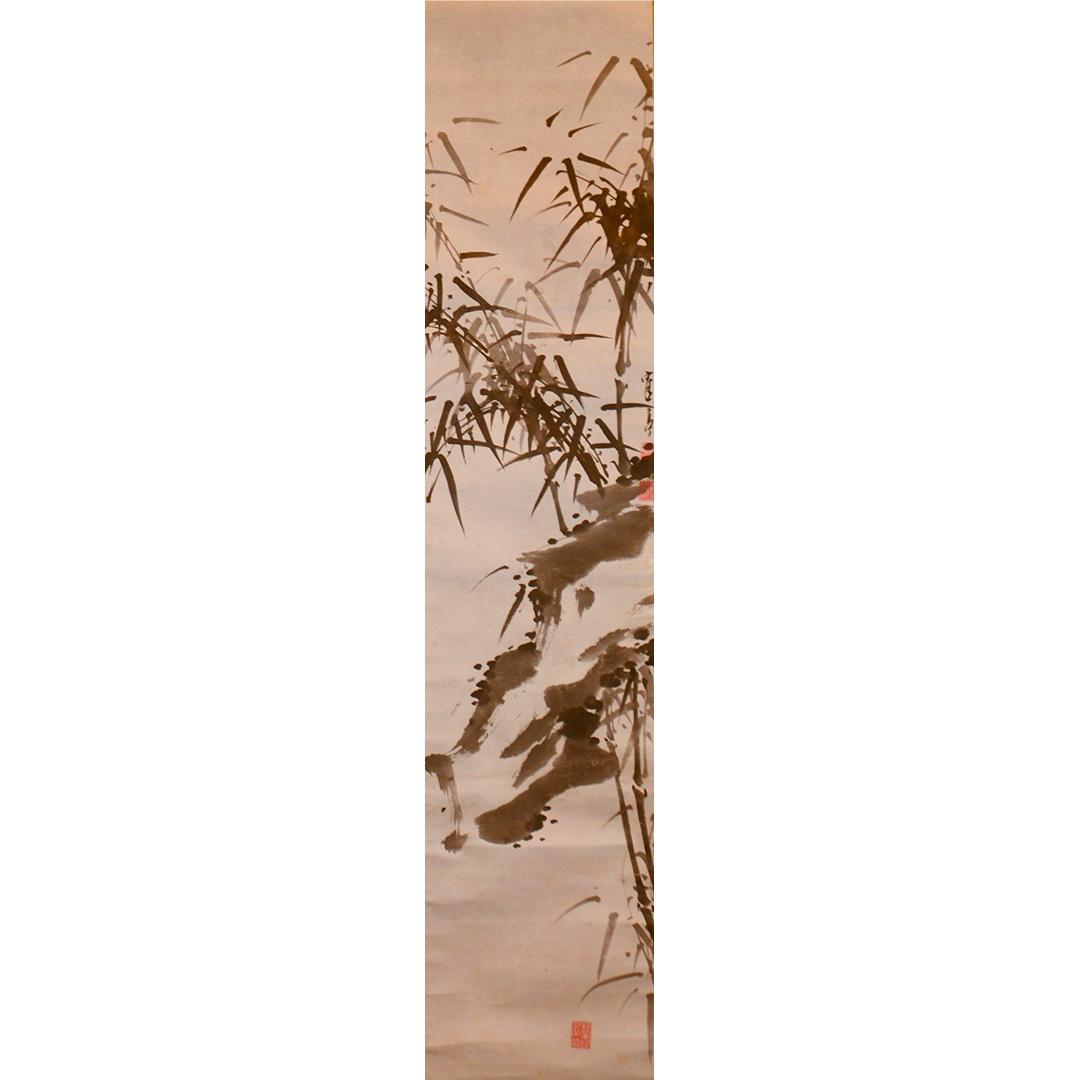
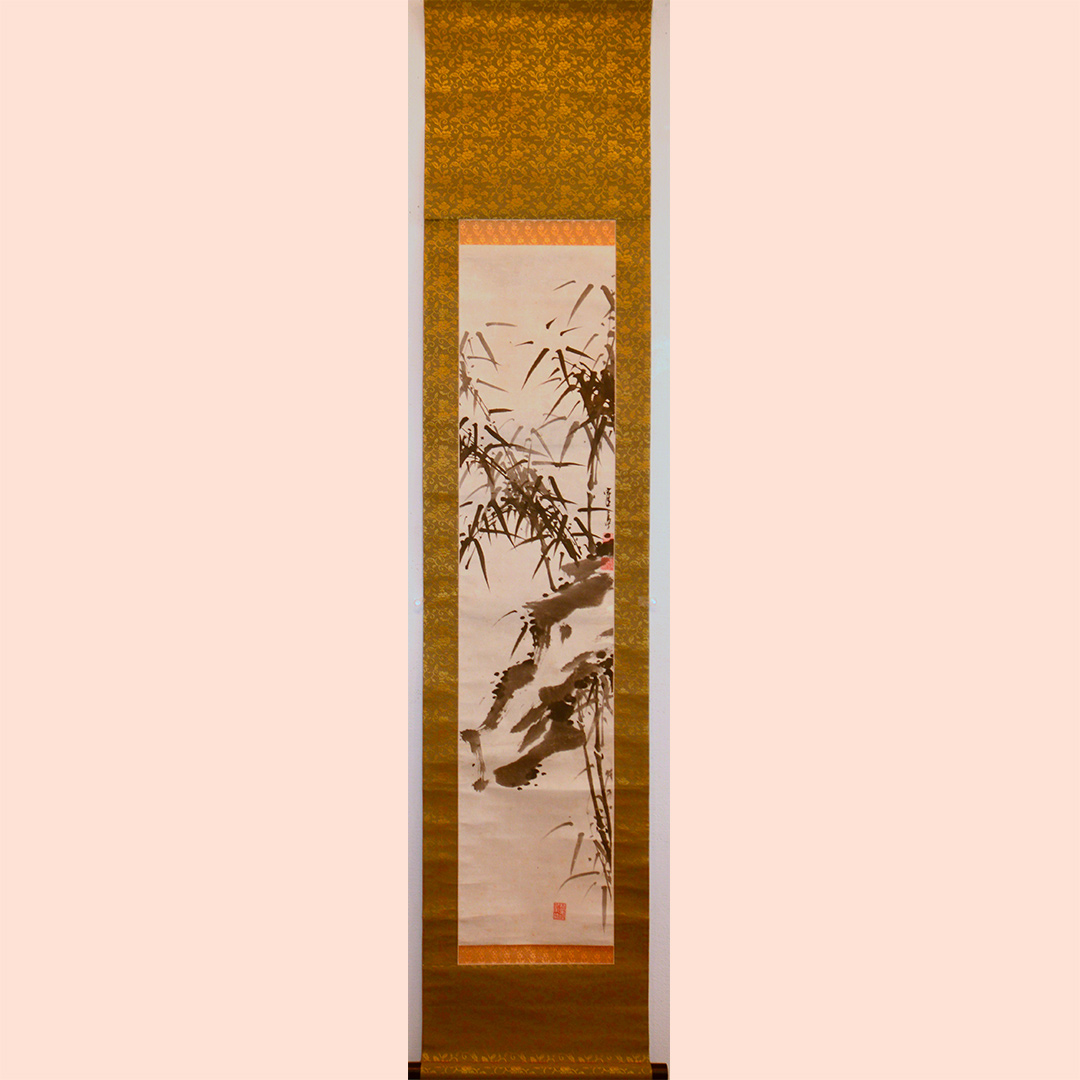
“Bamboo in Ink”
Kakutei
Click the image to enlarge.
- Artist Name
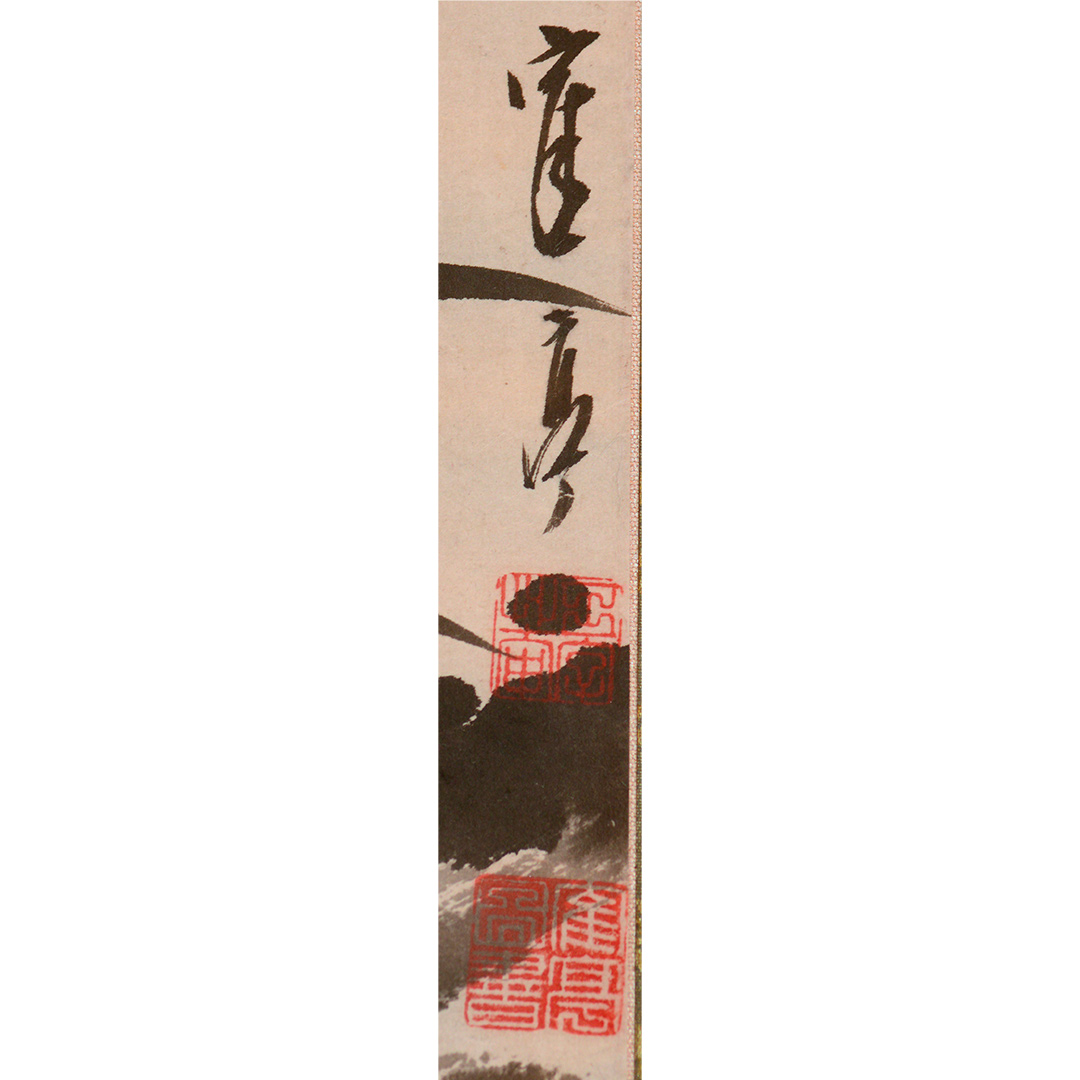
- Kakutei
- Title
- “Bamboo in Ink”
- Dimensions
- painting:121.4×27.1㎝
full length:186.0×39.2㎝ - Medium
- Ink on paper
- Year
- 1764~1785
- Description
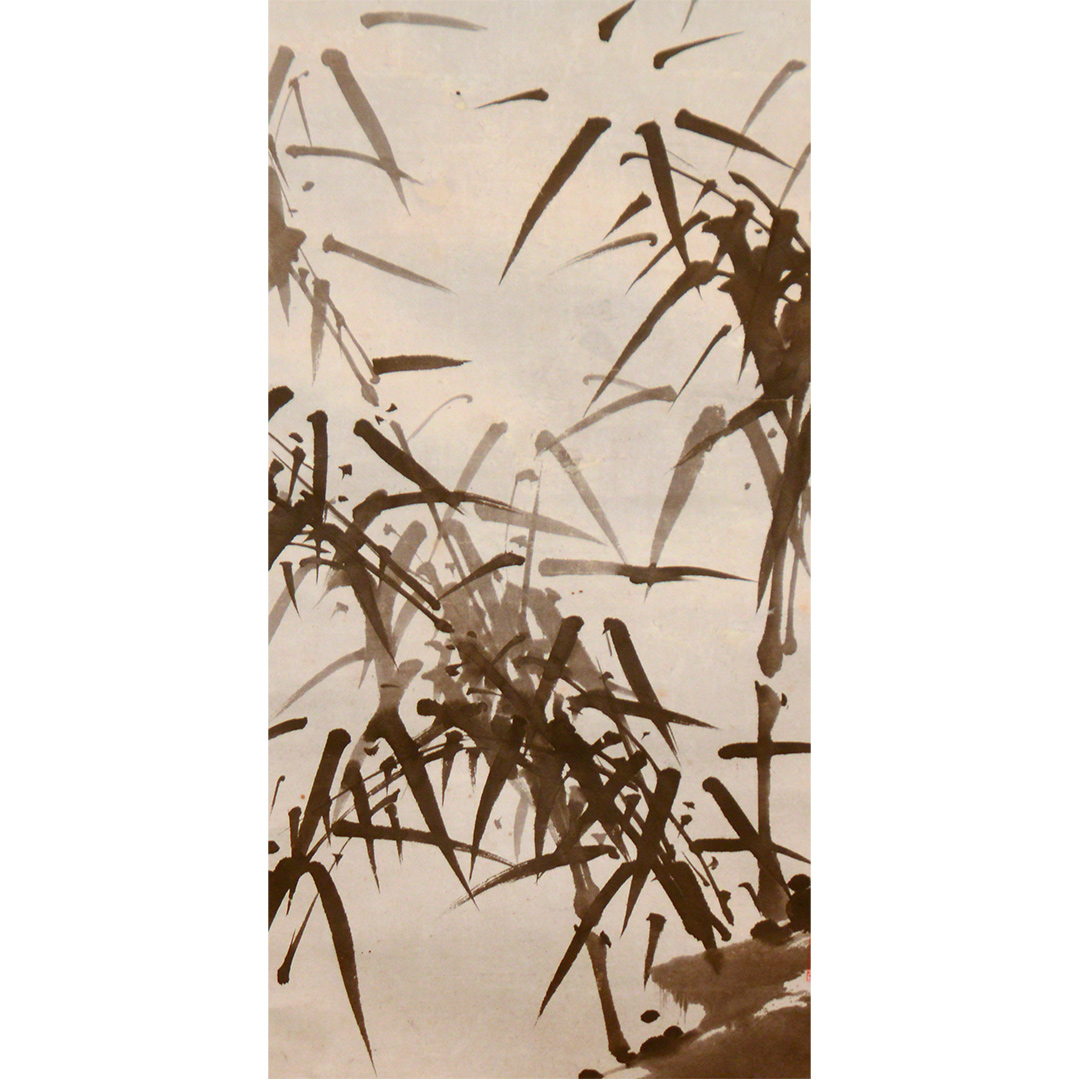
- This work is a *Bamboo and Rock* composition, with a fantastically shaped rock placed at the center of the picture plane and bamboo depicted beside it. The bamboo leaves rise from the lower edge of the composition, pass behind the central rock, and extend upward. With swift, flowing brushstrokes, the leaves are rendered as if swaying in the wind. By painting the leaves in the foreground in dark ink and those in the background in lighter ink, the artist creates a convincing sense of spatial depth.
Kakutei was the art name of Kaigan Jōkō (1722–1786), a mid-Edo period Ōbaku Zen monk. His religious names included Genpō and Etatsu, later Kaigan; his Dharma names were Jōyō, Jōkō, and Jōhaku. While he is best known by the painting name Kakutei, he also used such studio names as Nyōze Dōjin, Nyōze Shujin, Beijuō, Hakuyō Sanjin, Nansōō, Bokuō, and Gojian.
He was the Dharma heir of Gakusō, the fourth abbot of Shōfuku-ji in Nagasaki. Initially ordained at that temple, he left the priesthood at the age of twenty-five after his teacher’s death and became a pupil of Yūhi (Xiong Fei), a direct disciple of Shen Nanpin. There he studied richly colored, naturalistic bird-and-flower painting and established his own distinctive style. He later returned to the Ōbaku order and became the sixth abbot of Shiun-in, one of the thirteen rotating subtemples of Manpuku-ji, where he spent fifteen years. Although invited to serve as abbot of Shōfuku-ji, he declined, and subsequently moved to Osaka and then to Edo. From an early age he loved painting and excelled particularly in bird-and-flower subjects, orchids, and ink paintings of bamboo.
He maintained close friendships with leading cultural figures such as Kimura Kenkadō, Yanagisawa Ki’en, Ike Taiga, and the Ōbaku monks Taihō Shōkun and Monchū Jōfuku. By disseminating the style of Shen Nanpin throughout the Kyoto–Osaka region, he played an important role in fostering the rise of realism in the painting circles of the late Edo period.