![Kyoto [Gallery-So] for purchase, sale, and appraisal of art works](https://gallery-so.net/images2/common/so-logo.png)
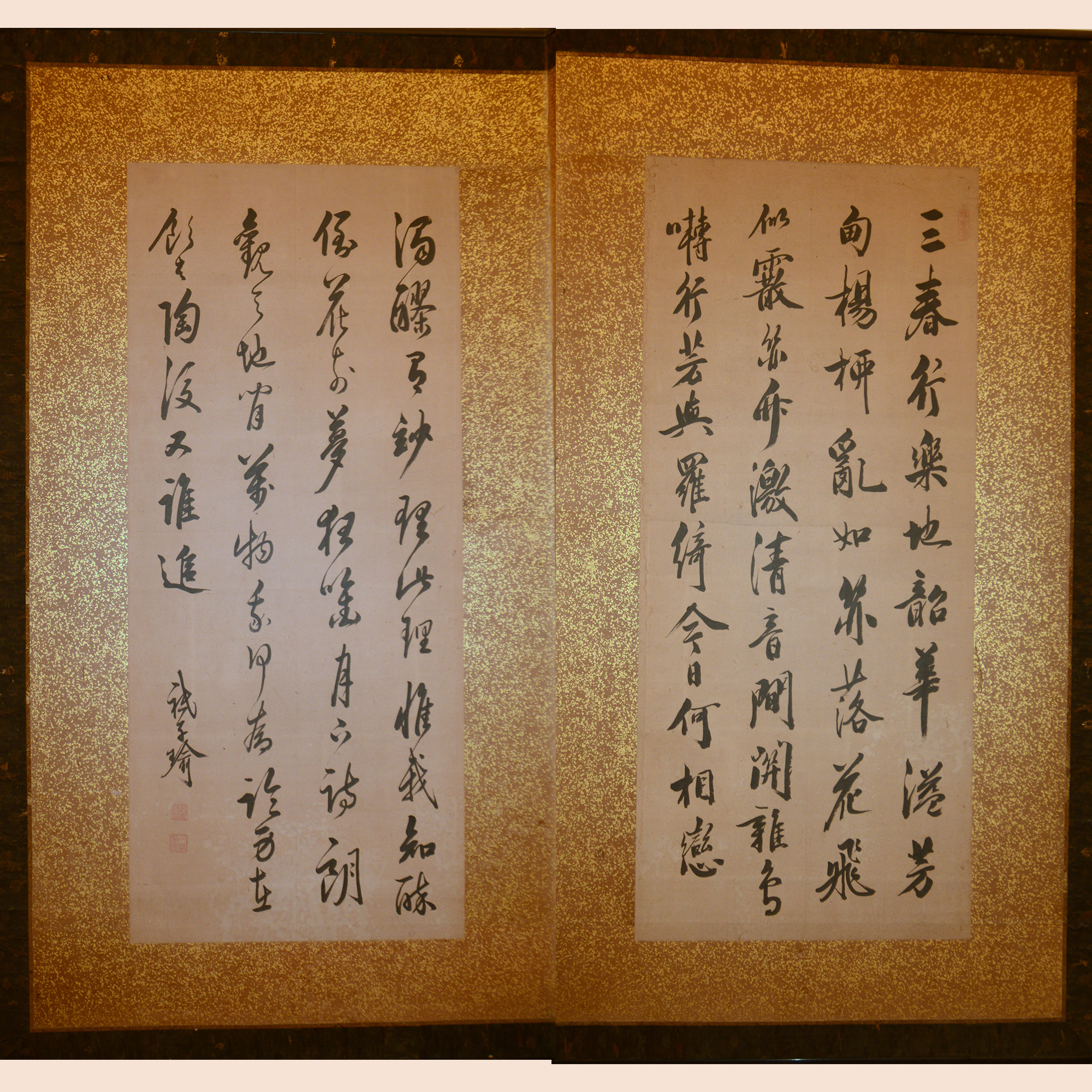
“Poetry and Calligraphy Screen (Two-Panel Folding Screen)”
Gion Nankai
Click the image to enlarge.
- Artist Name
- Gion Nankai
- Title
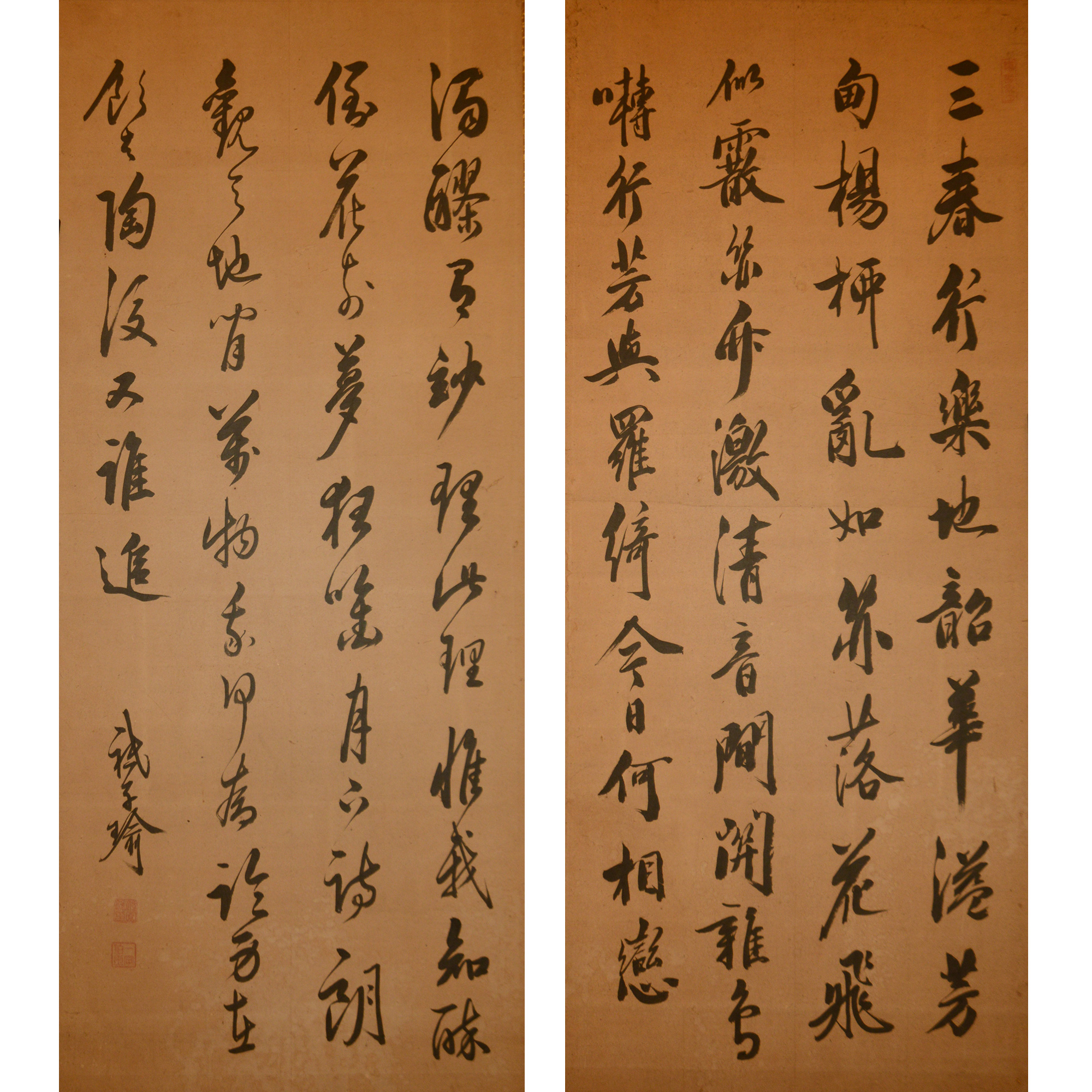
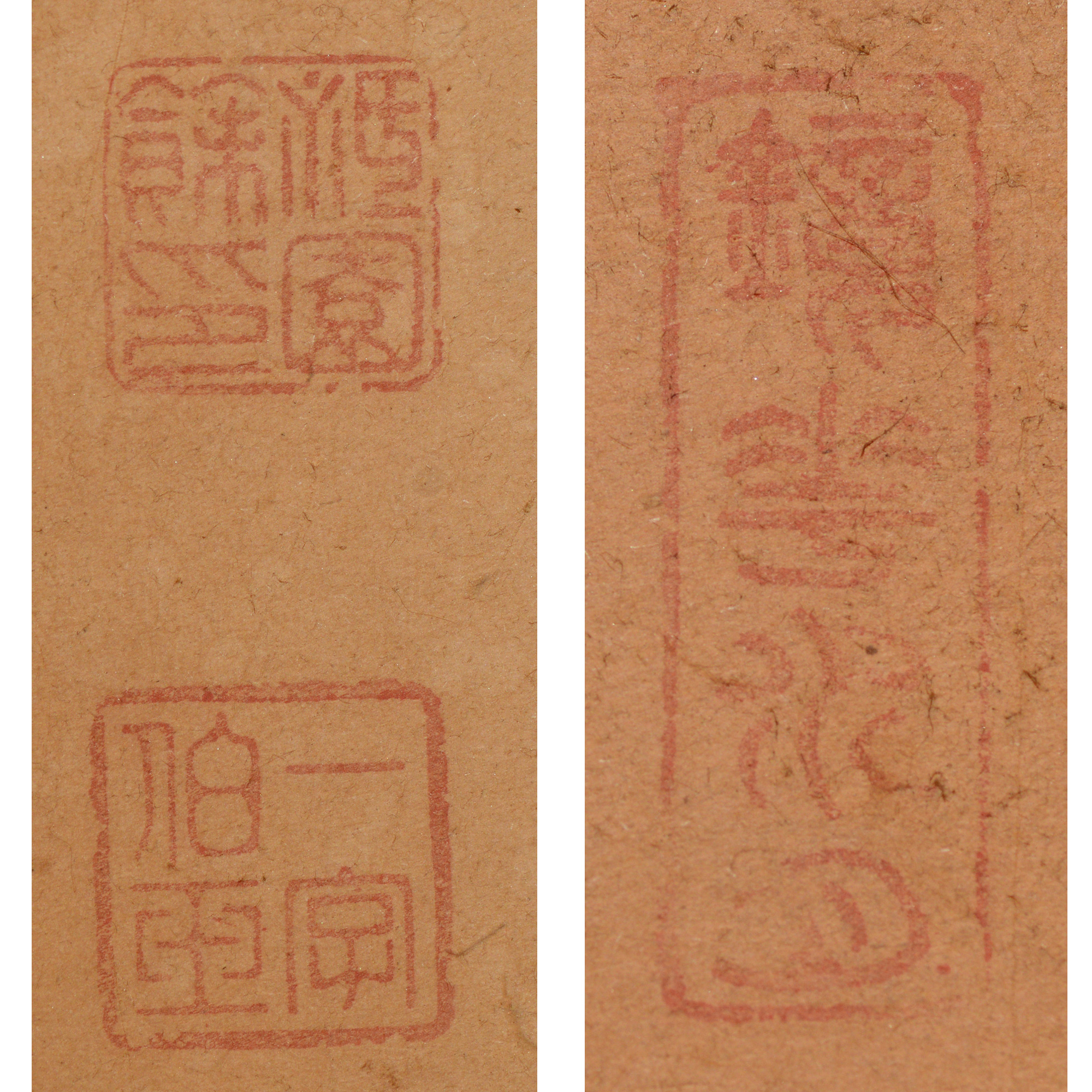
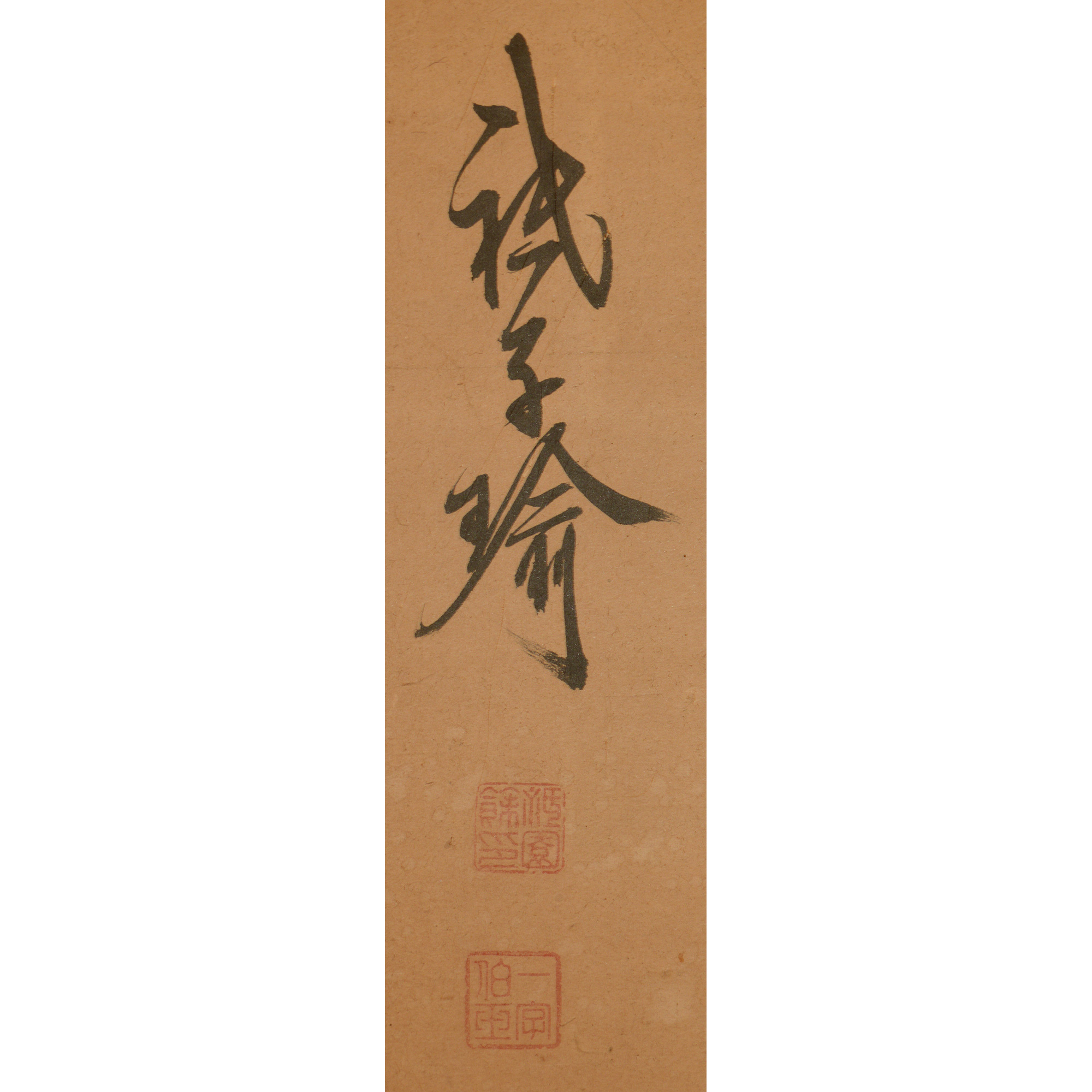
- “Poetry and Calligraphy Screen (Two-Panel Folding Screen)”
- Dimensions
- painting:126.5×55.0 ㎝
full length:174.4×189.0 cm - Medium
- Ink on paper
- Description
- This work is a poetry-and-calligraphy screen by Gion Nankai, composed as a two-panel folding screen (nikyoku issekki). On each panel, a single line of a five-character regulated verse (gogon risshi) has been boldly brushed.
From a young age, Nankai demonstrated exceptional talent in composing Chinese-style poetry and left behind a substantial body of poetic and calligraphic works. In addition to this example, approximately five other large-scale screen-format works are known.
**Gion Nankai (1676–1751)** was a Confucian scholar, Chinese-style poet (kanshi poet), and literati painter of the mid-Edo period. He is regarded as one of the pioneers of Japanese literati painting (bunjinga), and, together with Hattori Nankaku and Hekijō Hyakusen, is considered one of its founders.
He was born in Edo as the eldest son of Gion Jun’an, a domain physician of the Kii domain. His personal name was Yu, his courtesy name Hakugyoku, and Nankai was his art name; he also used such sobriquets as Shōun and Shinten’ō. Because his original family name was Minamoto, he adopted the Sinicized names Gen Yu and Ruan Yu in the Chinese manner.
In 1689 (Genroku 2), he became a pupil of Kinoshita Jun’an. In 1697 (Genroku 10), he was appointed a Confucian official of the Wakayama domain and moved to Wakayama, but in 1700 (Genroku 13) he was expelled from the castle town due to misconduct. In 1710 (Hōei 7), he was pardoned and, upon the recommendation of Arai Hakuseki, served as an official host to a Korean diplomatic mission. In 1713, when the domain school Minato Kōkan was established, he was appointed its head.
Nankai also displayed remarkable talent in calligraphy and painting. At a time when literati painting in Japan was still in its formative stage, he studied Chinese painting manuals such as the *Hasshu Gafu* (Eight Types of Painting Manual) and the *Mustard Seed Garden Manual of Painting*, acquiring knowledge and techniques of Yuan and Ming literati painting through printed editions imported from China. In doing so, he helped lay the foundations of Japanese literati painting. His influence on later generations was profound: Yanagisawa Ki’en and, subsequently, Ike Taiga—who would bring Japanese literati painting to full maturity—both received guidance from him.